

I’m Not Going to Finish, But I’m Going to Learn | Ballarat Marathon 2026
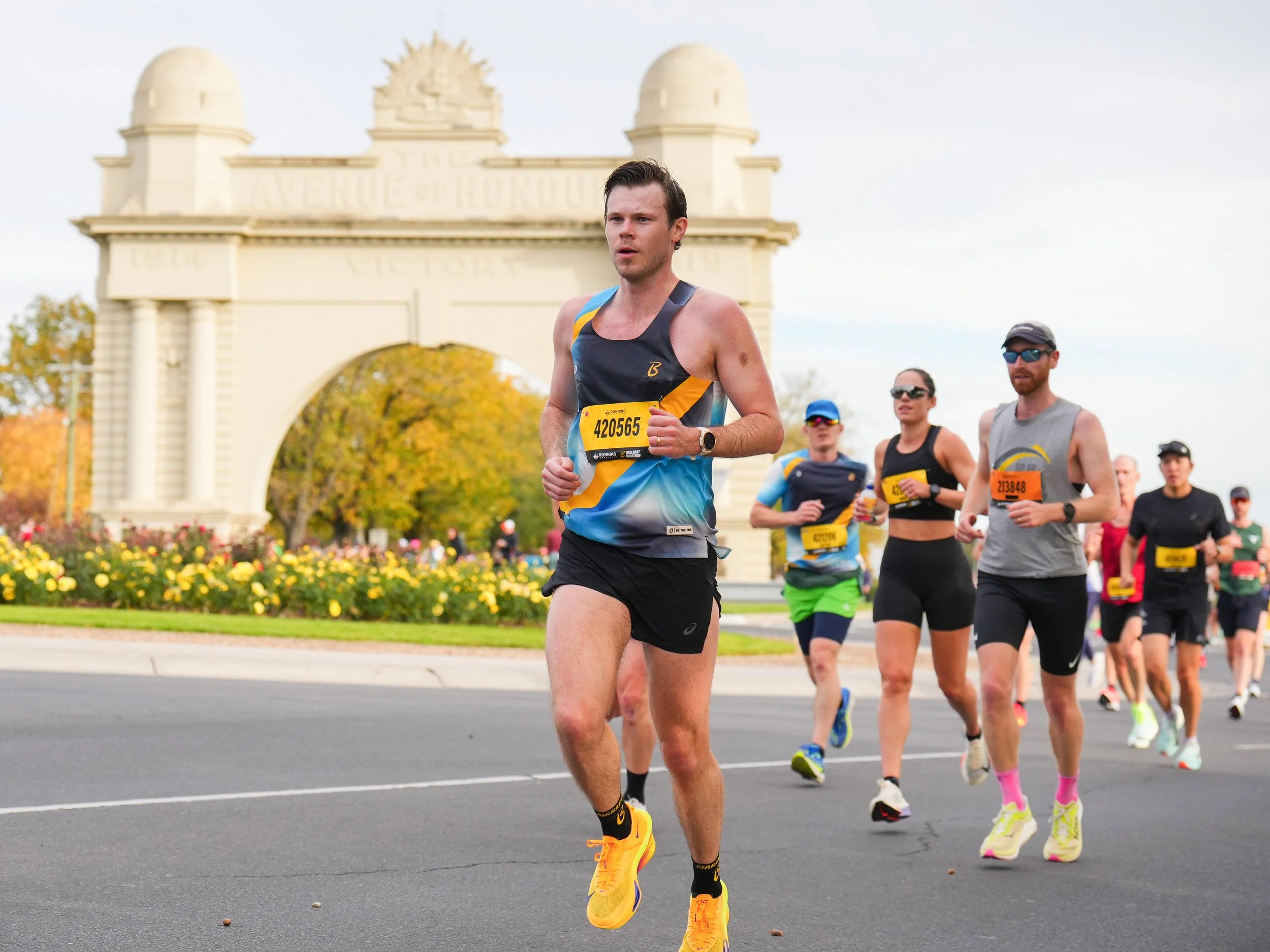
Running through the Avenue of Honour at the Ballarat Marathon 2026
It’s hard to admit to yourself that you’re not ready for a challenge, because the nature of running is about overcoming challenges. I had to do this, properly, for the first time - and I’m glad I did. Let me tell you why.
The Voices: Ballarat vs. Singapore
On April 26, I ran half of the Ballarat Marathon. During the run, I was transported to a very similar mental state as I was whilst running the Singapore Marathon in 2023, where finishing the marathon felt like an impossible challenge from 15km into the race. For over two hours that morning, I pushed away voices saying “pull the pin” that became increasingly louder, whilst sweating through the most challenging weather conditions I’ve ever raced in. And that day, I actively parked all objective goals of time & pace - and I finished in that glorious National Stadium with literally nothing else to give.
Ballarat was a different narrative. I didn’t have those key training runs in my legs this time around, those ones that you finish thinking “I’m close to ready for the day now”. The physical endurance wasn’t kicking into gear. The niggles I’d sustained through my hip a few weeks’ earlier were creeping up from a 2/10 to a 4/10 pain rating. And that flow state that every runner dreams of during those early-to-middle stages of the marathon was missing.
That’s where the inevitability kicked in - “today’s not going to be my day”.
But what does “going to be my day” actually mean? When we hear the statements like “sorry to hear it didn’t work out” when someone doesn’t finish a race, it’s insinuating that there was nothing gained from not completing the distance that runner registered for. When I woke up that morning of April 26, to be honest, I felt exactly that way too.
If someone asked me before that race “how do you feel about DNF’ing a marathon?”, I probably would’ve said:
“Not finishing a race - whilst not a complete failure - is something that is inferior to completing a race. It’s important to finish what I start, no matter the state I’m in.”
Somewhere on that first lap of Ballarat, that perception started to change.
The Decision
When the possibility pulling out creeped in from 15km, which then became an obvious decision at the 18km mark, I had to start dealing with the reality of not getting a finisher medal (always important), not seeing that wonderful Ballarat crowd for a second time, and ultimately, not finishing something I started.
Accepting that reality is difficult for anyone; regardless of whether you’re running in regional Victoria, or when there’s a key moment in your life that isn’t going to play out how you’d envisioned it. Runners want to finish events they’ve invested a lot of time, effort and resources towards - and even more so when there’s other incredible people in their lives who often sacrifice their time, effort and resources. It’s not easy for determined people to stop what they’re doing and think about why they would keep going, then evaluating the net outcome if they continue.
It was that 15-minute period between the 15km and 18km mark where I needed to remind myself that I’m a different runner, and a different man compared to who I was through those moments in Singapore. I knew my body on this particular day was not going to handle the stress I put it through in 2023. And so in all honesty to myself, I said to myself “today isn’t the day I finish a marathon, but today is the day I learn about the marathon, and I learn more about myself.
The DNF
When I stepped off just after the halfway point, I felt calm. It was unexpected - even though I had that on-course discourse with myself, I still thought that disappointment would rise through me after stopping my Garmin. But it never really came through. I walked with ginger legs to the bag drop area a few hundred metres away, cheering for others on the way. I witnessed the determination etched across so many faces, and the realisation that they were halfway through their intended journey.
Some of those runners smashed their PB’s, and others didn’t meet their objective goals that morning, but the one thing we all had in common is we committed ourselves to doing something challenging. And all of us discovered something about ourselves that morning too, irrespective of what our watches and official results said.
The Takeaway
So what did I learn about the marathon? Well, I learned that it’s actually ok to stop running. It’s ok to stop for whatever reason is significant enough for you - and that you decide what that reason, and what that point of time is during your marathon journey.
That significant reason for me that morning was that I want to continue running this year. I want to keep showing up physically able for the people in my life. I want to walk to and from the train station without compensating for my gait. Ultimately, I want to feel that my body is mine again and that it’s doing what I know it’s capable of doing. And that was enough for me to be ok with stopping, and I’m ok with that.
And what about me? What lesson do I take away from what’s objectively a defeat, to become a more successful individual? Well that’s the harder question to answer I think, and that took me some time to figure out - but I think I’ve landed on it.
Gratitude. Running is something we should be continually grateful for. We actually get to spend our time participating in this activity that we love, in whatever form that is for you. After a conversation with someone who knows a lot about positive introspection, I now understand very clearly that we don’t “register” to run marathons, we get to run marathons. We are able to consciously and freely choose to run marathons, and we’re able to be involved in an activity - often with others - that brings us something I argue is the currency of life, happiness.
I never imagined that a DNF would bring more clarity than questions about my ability to run, and I certainly didn’t think that I’d learn more than running well below my “usual standard” for half of a race, than I would from some of my best races. Like that day in Singapore - which was an hour slower than the marathon I ran before that - I believe you can find out so much more about yourself when things don’t go as you visualise, and that quote “marathons are life” really does make so much more sense to me now.
With gratitude, and my own significant reasons, I can’t wait to start my next running challenge soon.
